I spent three months (Aug-Oct, 2019) )in Kobe, Japan on a research internship. The weekends during that time were free to explore. Restaurants in Japan are not cheap, and certainly not cheap in an intern’s allowances (a typical meal in an average restaurant would cost around 1500-2500 yen). I tried to save as much money as possible by cooking my own meals most of the time so that I could try various Japanese dishes at least once during my stay.
While Japan is different from the rest of the world in many ways, it also has one of the world’s most innovative food scenes. In this post I am sharing my experiences of Japanese food, at least the ones I took a picture of. Most of the pictures in this post are taken using my phone camera (one can rarely deal with DSLR camera settings with food in front).
Sushi
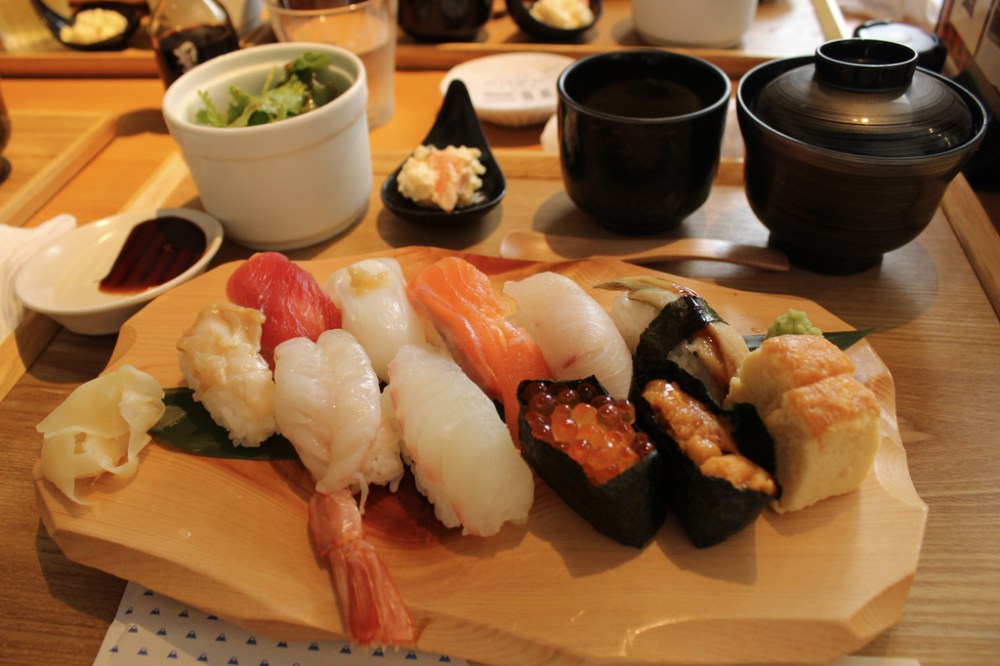
What better way to start about Japanese food than ‘Sushi’? This is the most common type of Japanese food consumed all over the world. While it is available everywhere in Japan, I tried it for the first time while visiting Hiroshima. It was a sushi platter (picture above) with various kinds of raw seafood including tuna, shrimp, octopus, salmon, caviar, squid etc. (at least those are the ones I recognize) on a small pile of bite-sized sticky rice. Along with the sushi, miso soup, salad, some egg preparation, soy sauce and wasabi is also served.
- The cake-like piece at the very right in the picture is actually a kind of omelette called ‘Tamagoyaki‘.
- ‘Miso soup‘ is almost a staple in any Japanese meal. It has an earthy flavor. I came to love it in due time, so much that I used to look forward to it everyday during lunch.
- A plant derived green paste-like condiment called ‘wasabi‘ is always served with sushi. A tiny bit of it is supposed to be lathered on the sushi and then dipped in soy sauce to be eaten. However, one must always be very careful with it because it is extremely zingy and spicy (learnt from a horrible mistake).
Sashimi
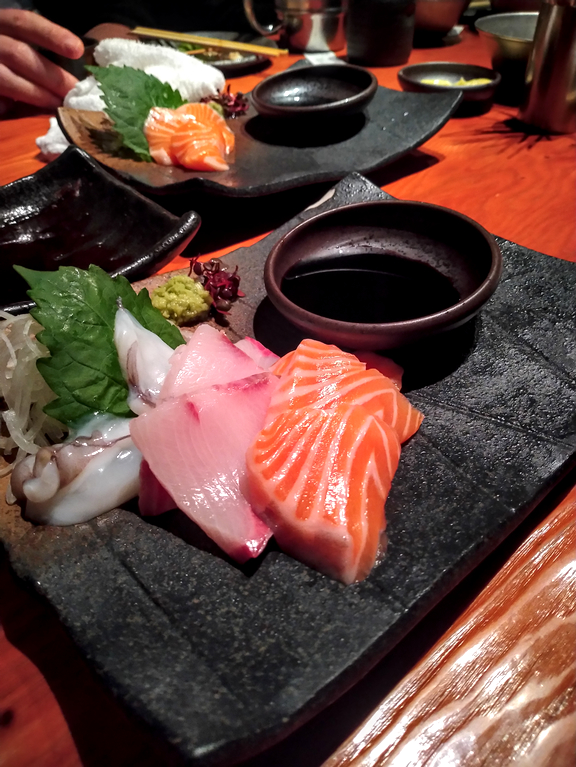
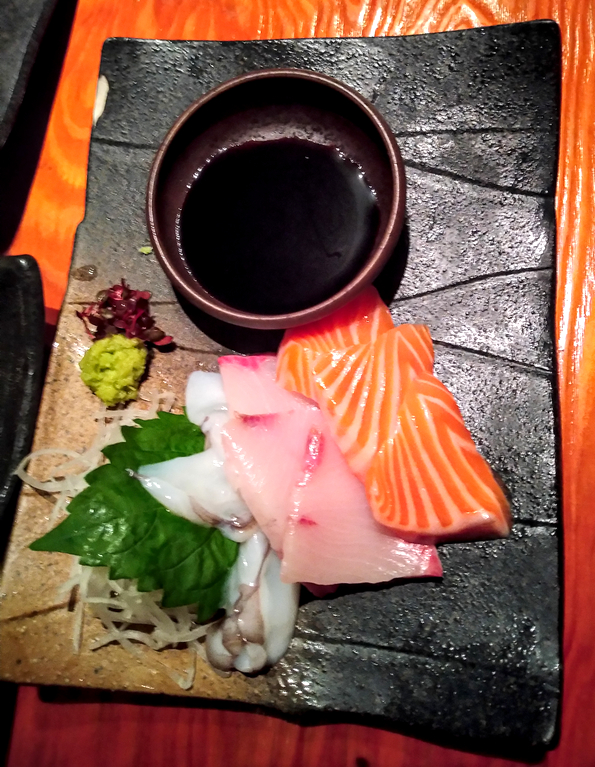
‘Sashimi’ is simply put, thin slices of raw food, mainly seafood. Unlike, sushi, there is no rice accompanying the fish. The sashimi platter in the picture above contains salmon, another fish (can’t remember the name) and octopus, followed by green shiso leaf and thinly chopped daikon below it (right to left). It is served with soy sauce and wasabi and supposed to be eaten in a similar manner to sushi.
While the idea of eating raw fish might seem revolting to many, salmon sashimi is one of my favourite dishes.
Kushikatsu
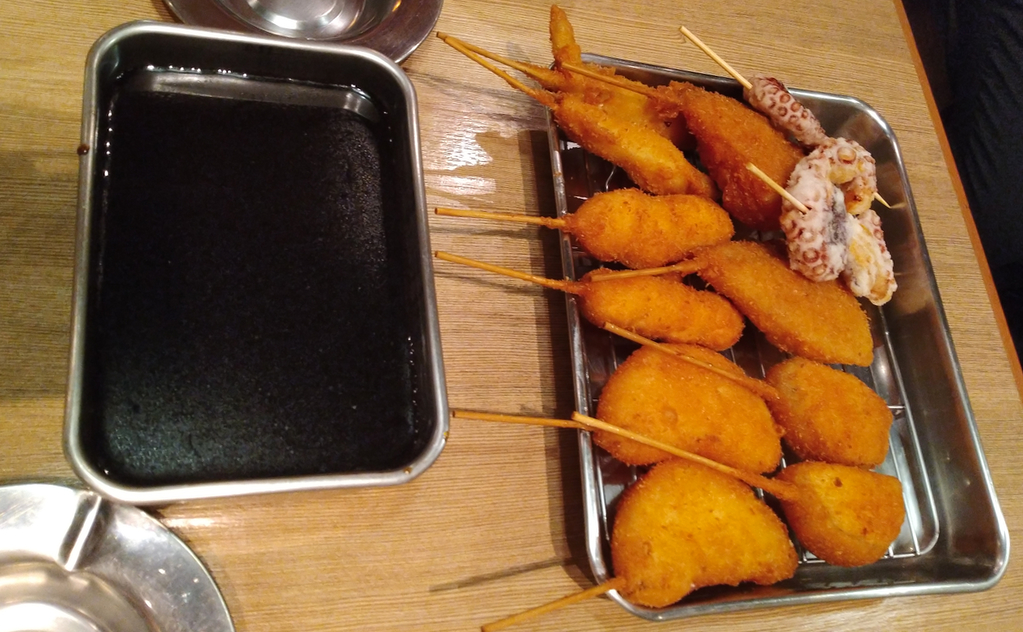
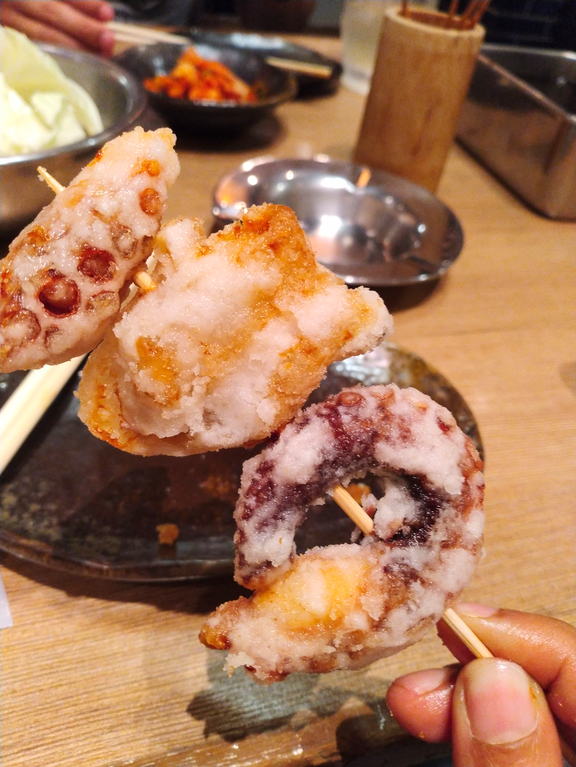
I tried this dish in Kushikatsu Shirotaya in Dotonbori, Osaka. The owner of this restaurant is Giant Shirota, who is a famous “food fighter”.
Kushikatsu is a deep-fried dish of some kind of meat or vegetable on a skewer. There is a special dipping sauce accompanying it (black liquid in picture). This container of sauce is shared between different customers, therefore one is strictly not allowed to double dip, i.e., no dipping your skewer back in the sauce after taking a bite. You can however, spoon some sauce out using a strip of cabbage, large pieces of which are already placed on the table.
I tried skewers of onion, lotus root, eggplant, chicken and the best one, octopus (picture on the right).
Momiji Manju
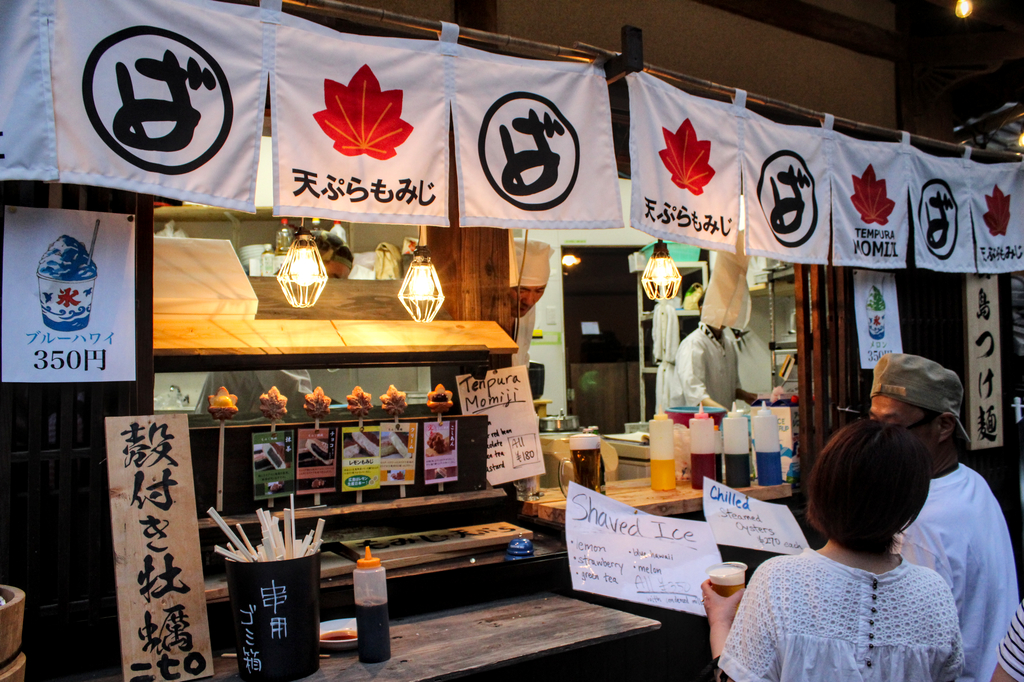
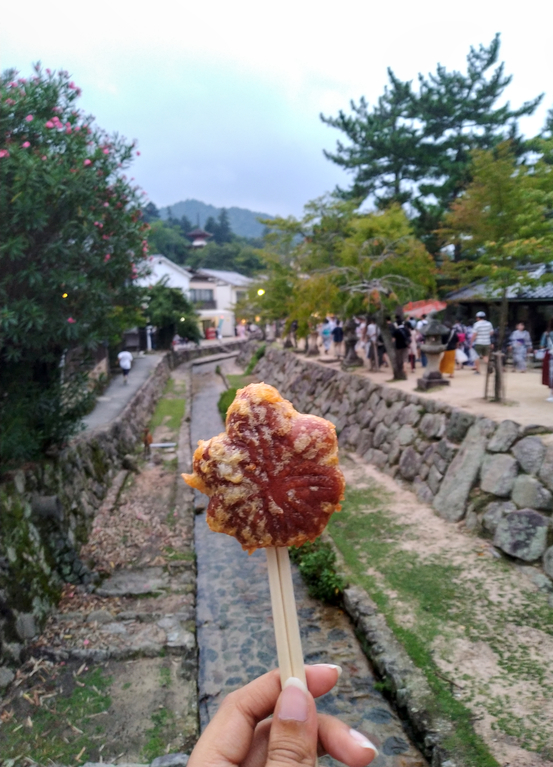
‘Momiji’ means maple and ‘manju’ is a type of cake in Japan. Quite literally this translates to maple leaf cakes. These are a specialty in the Miyajima island in Hiroshima prefecture. They are basically maple leaf-shaped steamed cakes with filling of various flavors, the most common ones being red bean paste and green tea (matcha).
Oysters
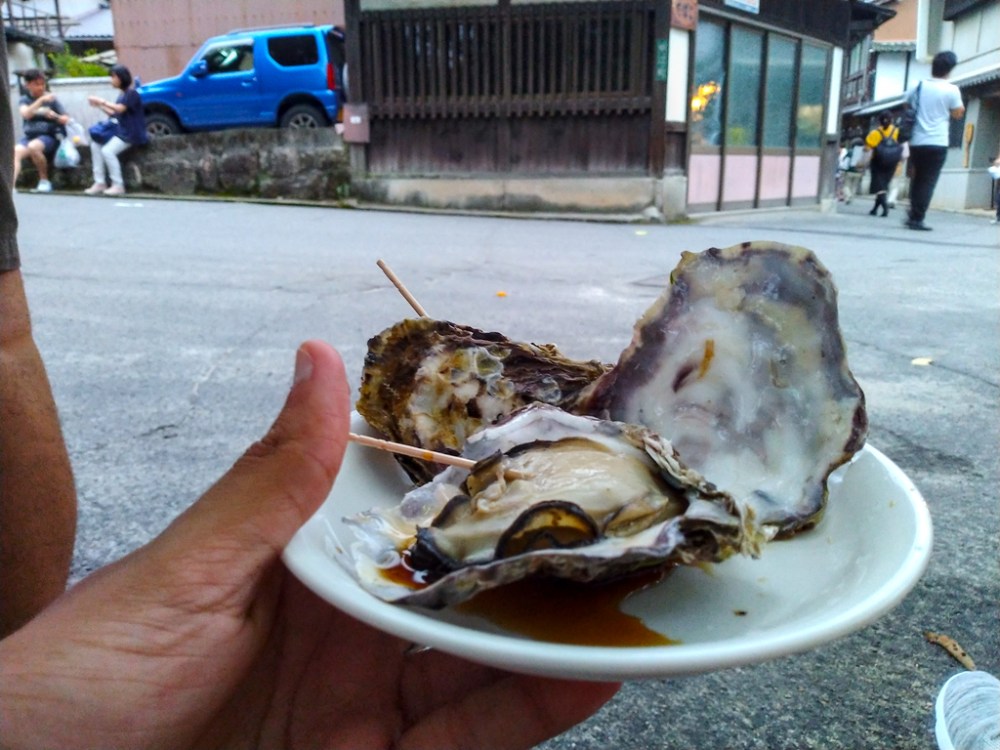
Oysters from Hiroshima are well-known in Japan as well as in other parts of the world. They can be eaten raw with soy sauce, deep fried, grilled or steamed. I had mine steamed with soy sauce from a food stall in Miyajima. Honestly, I do kind of get what all the fuss is about. It tastes so fresh, just like ocean on a plate (that is the best description I could come up with).
Ramen
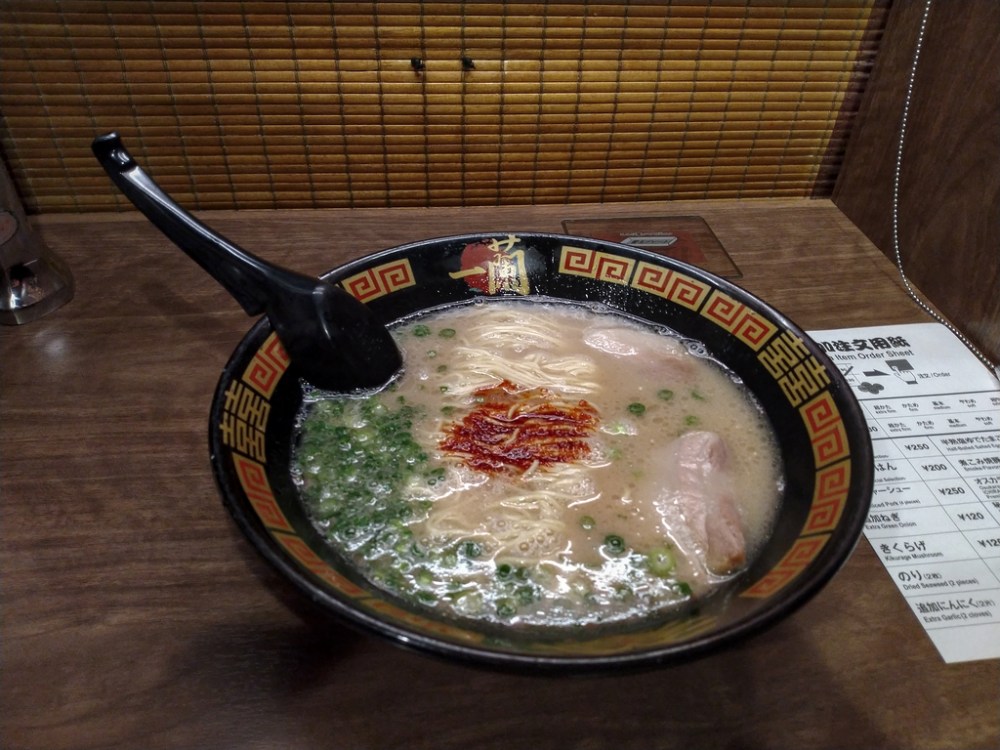
I am not a fan of noodles, and even less of noodles in a broth. This opinion formed early on in my childhood with Indian rendition of noodles in a bowl of tasteless soup (although many actually love ‘maggi’ or rather, ‘soupy maggi’). Therefore, I was very reluctant to try the Japanese ramen dish. Then, as I kept asking people for food suggestions, everyone would first ask me if I had tried ramen yet. Therefore I decided to try it, and on the basis of various recommendations, I went to Ichiran in Kobe. And boy! that is an experience I will never forget.
There is always a long queue in front of the restaurant around meal times. Once you get to enter, you have to choose the toppings you want in your ramen and pay accordingly using a machine. When a seat frees up, the waitress lets you into privacy heaven. There is a table running along the wall with dividers such that place for one or two are marked and secluded. You sit facing a window which has a retractable curtain-type of thing into the kitchen which is opened only from the other side. The food is served through the curtain.
My view on noodles has changed forever after trying this ramen. Most Japanese food have milder taste and I was craving some spiciness by the third month of my stay. With the perfect balance of spicy, tangy and earthy, this dish was the right thing to have happened to me at the right time.
Sake
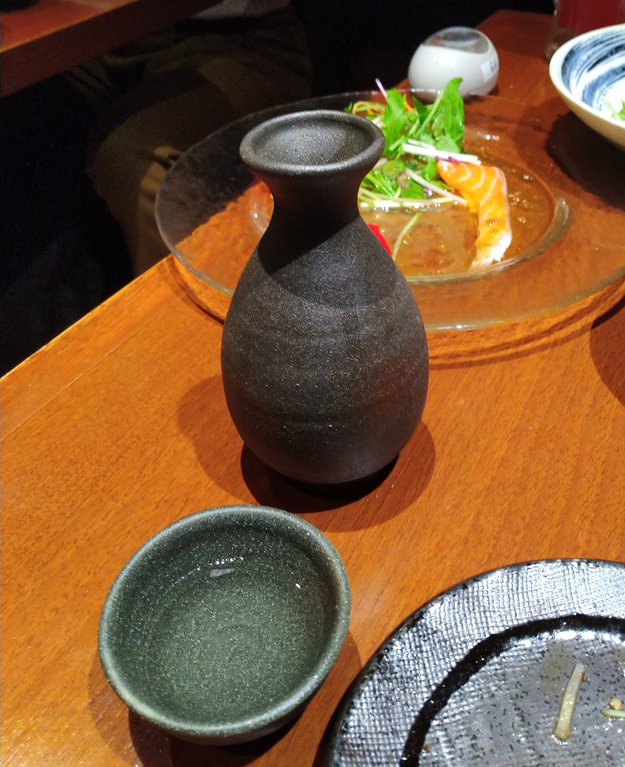
Technically ‘sake’ is a liquor, but it is a must mention in the Japanese dining experience. It is an alcoholic drink made from fermented rice and is the national beverage of Japan. Served in a porcelain jar and sipped from a small porcelain bowl (picture above), it can be taken both cold or warm. There are traditional etiquette associated with pouring and drinking sake, for example, always pour sake for others and never fill your own cup yourself, rather, someone else will pour it for you.
It is difficult to draw an analogy with other Western drinks. The alcohol content is between 14-16%, however it is incorrect to call it wine or beer. Sake is just sake.
Cheesecake
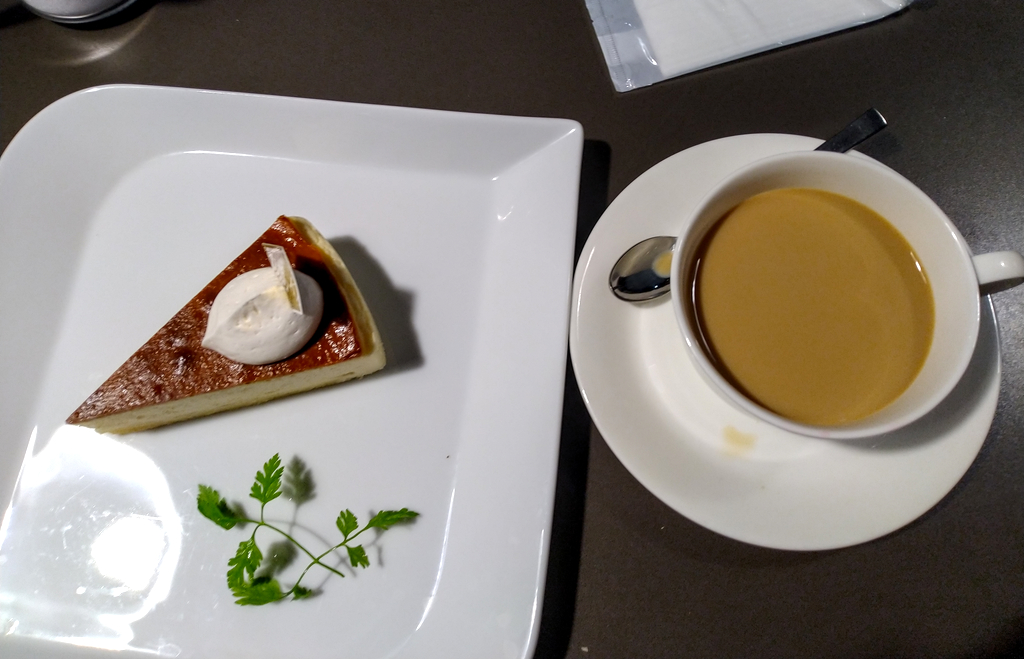
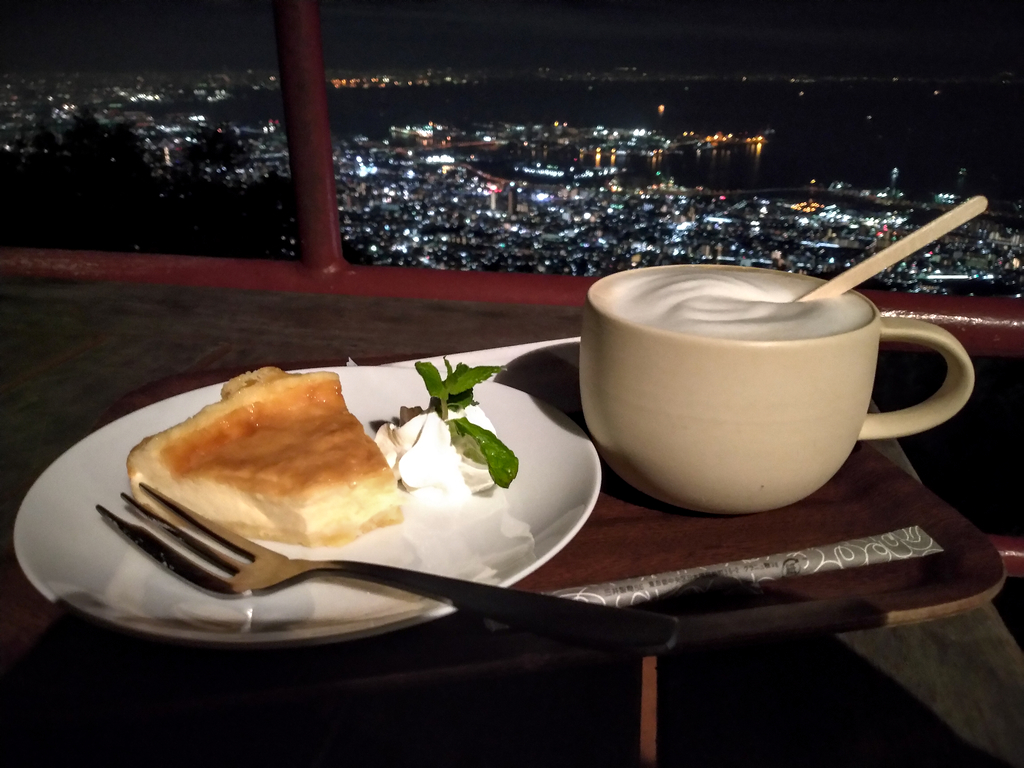
Oh. My. God. The cheesecakes are heavenly!! I am not a fan of the standard New York cheesecakes because they often turn out to be quite heavy. However, imagine a piece of delicious cloud and that’s what I found in the form of cheesecakes in Kobe. Fluffy, light and the right amount of sweetness, this is something I couldn’t resist having quite a few times.
The best one I had was in a small cafe with a French name and ambience (Cafe la Paix de Bois in Kobe) which I just happened to stumble upon while just roaming around. They had a quaint setting with many antique items (which are on sale if you are interested) and a pet dog and two birds which are very friendly. Taking pictures inside was not allowed, however, the host graciously offered to take a picture with the dog in my lap. Since the pictures didn’t turn out well, I am not putting them out here.
P.S. In case you were wondering, the picture on the right is taken in a cafe at the top of the Maya mountain with a view over Kobe and Osaka.
Matcha Ice-cream
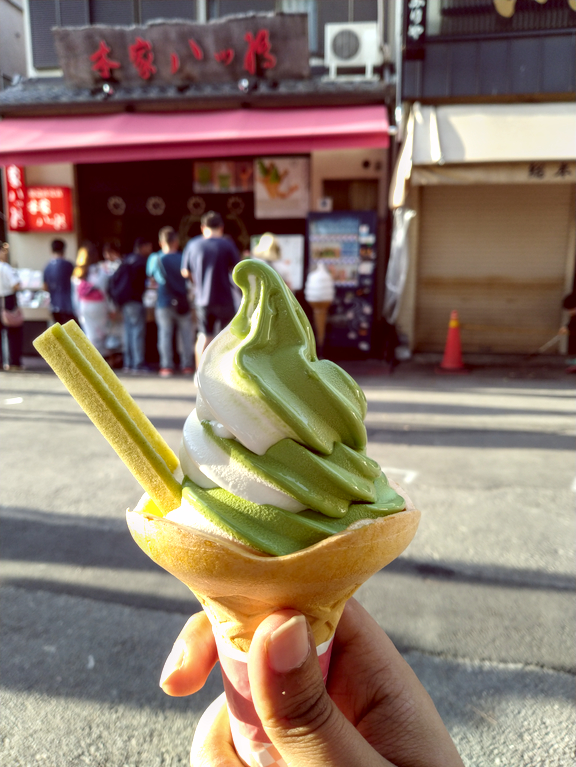
‘Matcha’ is green tea and it is quite well known how famous green tea is as an ingredient in Japan. In addition to a green tea drink itself, matcha flavor is used in a huge number of other food items (even in Kitkat). One item which you will come across everywhere in Kyoto is matcha flavored ice-cream. Anyone who has ever had green tea will agree it is not for everyone. So I was a bit afraid of having a full matcha ice-cream. I went for a half-matcha-half-vanilla flavor and it tasted surprisingly awesome!
Mochi
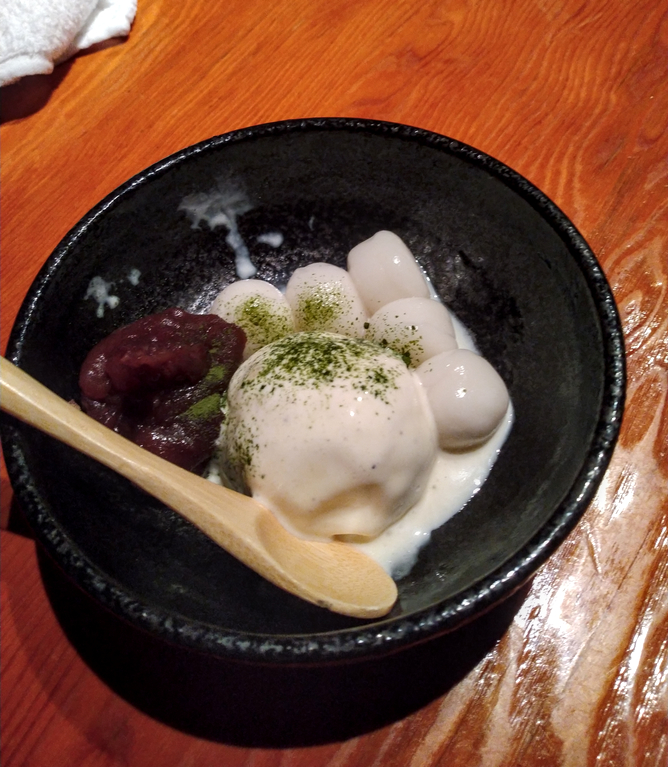
This is a Japanese dessert made from rice. It is sticky and hard to chew and this one was not too sweet. However, I am not a fan of ‘mochi’. Fact: mochi causes death due to choking, every year in Japan because it is so hard to chew.
Yakitori
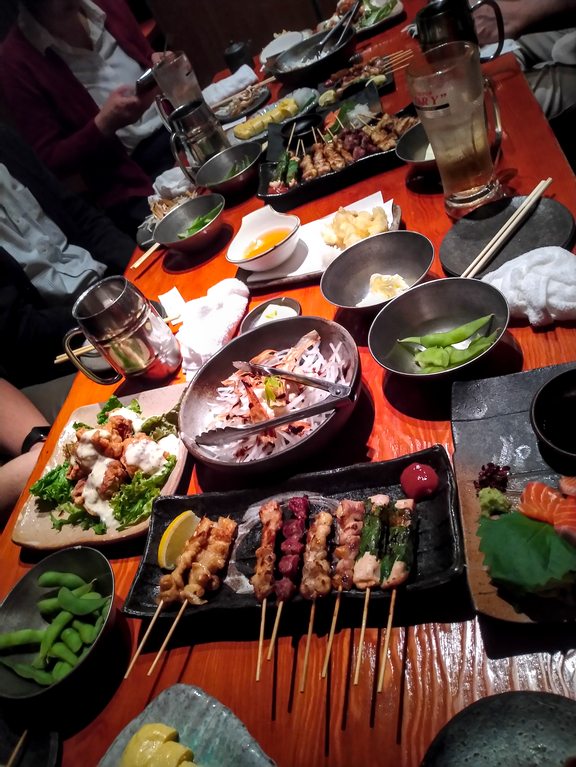
‘Yakitori’ is skewered bits of chicken roasted over charcoal (sort of the Japanese equivalent of kabab). It tastes good and is a great example of finger food. My coworkers took me to a yakitori restaurant for my farewell party (look at the spread in the picture!!).
I hope you enjoyed learning about Japanese food from my experience!!
 Pensive Scrapbook
The food looks amazing! Japan is definitely on my travel list!!!
LikeLike